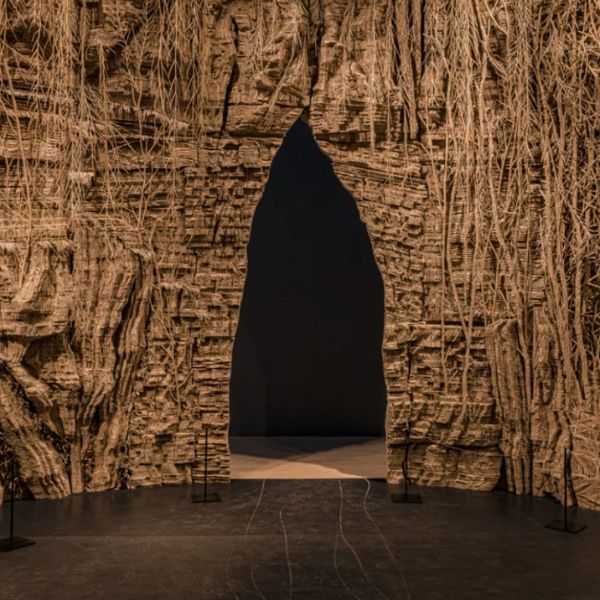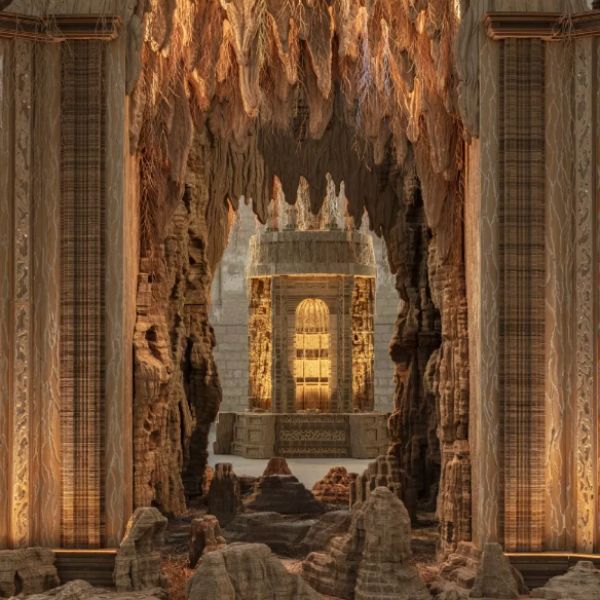
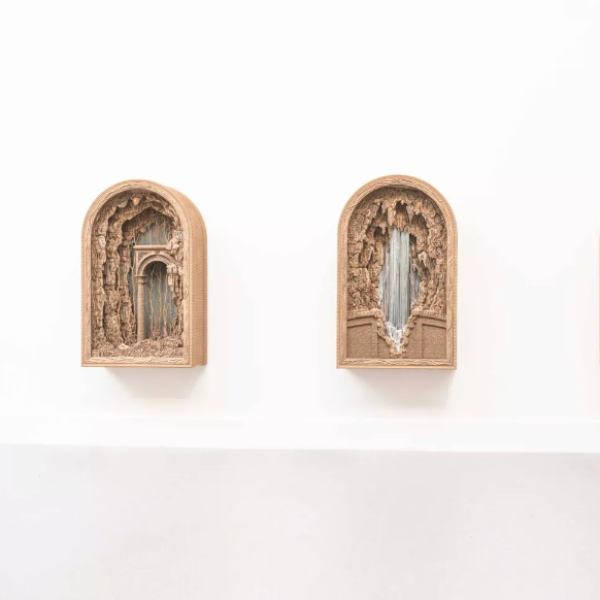
Cardboard, Eva Jospin’s material of choice, is worked here with the precision of a goldsmith. The artist enjoys combining the roughness of industrial tools such as the jigsaw used to cut through layers of cardboard with the delicacy of tweezers used to plant fine kraft-paper grasses. This physical engagement with the material allows her to create monumental works such as Duomo, a micro-architecture over seven meters high, which first impresses with its volume before revealing an infinite array of textures, surface irregularities, and intricate details.
The walk is punctuated by architectural follies, nymphaea, and Mannerist grottoes that evoke the gardens of the eighteenth century. Visitors pass through troglodyte dwellings and ruins before emerging into a vast and impenetrable forest rising four meters high, which concludes the narrative. The artist deliberately chose to leave the windows of the Grand Palais uncovered, integrating the Parisian landscape into the mental journey proposed by her installations.
Another important stage of her work is also highlighted: the use of embroidery. These embroidered panels, produced in collaboration with specialized workshops, allow Eva Jospin to reintroduce color while giving textile a sculptural density. Loose threads, beads, and cascades of yarn complete this dreamlike vision, offering a hybrid extension of her exploration of material.
Finally, beyond its aesthetic enchantment, Eva Jospin’s work offers a subtle reflection on our relationship with landscape. Although ecological engagement is not the central theme but rather a quiet background presence, the fragility of cardboard in contrast with the power of the forms represented underscores the vulnerability of our own environment.